Sunday, 30 December 2007

MRI scan price war.

Private imaging cowboys shoot it out

A couple of years ago it was quite common-place for patients to be charged £600 for a single area MRI scan. The atmosphere surrounding private medicine was very much like I imagine it is when buying a Saville Row suit: "if Sir needs to ask the price then Sir cannot afford it".
As MRI scanners became more widely available and patients began to shop around, or even go abroad, for their scans MRI providers began to compete on price.
I think the first to break ranks was the Cobalt Appeal in Cheltenham, who suddenly found themselves with vast overcapacity for their mobile service as hospitals in the West Midlands installed their own fixed scanners. As a registered charity they have financial advantages over purely commercial organisations and could also rely on charitable donations to provide working capital, rather than have to borrow money at commercial rates.
With little competition and clever marketing to potential referrers and directly to the public they established themselves fairly firmly as a low cost quality provider and drew patients from throughout the UK.
Last year Vistadiagnostics in London entered the market with a variable charging structure depending on the time of day but as low as £250 for one area and actually cheaper than the Cobalt Appeal for multiple areas and for contrast enhanced scans. Their business is based on the EasyJet model and relies on using the scanner 7 days a week for 13 hours each day with aggressive promotion of their service. I think this was quite a risk because rents and radiographers still have to be paid if the scanner is idle and costs in London are high. With such narrow margins they could only survive if they ran the scanner at full capacity.
They had the lucrative London market to themselves for about a year but just before this Christmas, Med-Tel, another private scanning centre in the City, announced a "special deal" matching Vista's prices for MRI. Not to be outdone Vista has taken the classic poker player's route and upped its stake and cut its headline price to £200.
Both companies are haemorrhaging money with Google pay-per-click advertising campaigns and, unlike the Cobalt Appeal, can't rattle tins at village fetes and shopping centres to restore their cash flow. It looks like the town ain't big enough for both of them and I foresee the one who blinks first will be eating dust before the new year is out.
Meanwhile, our private scanning enterprise, UK Radiology, which still offers scans cheaper than all of them, sailed serenely on, gradually taking business off the commercial scanning centres and Cobalt Appeal while spending virtually nothing on advertising. Irritatingly though, after my self-contented last post on this blog, it has disappeared off the first page of Google again for the search term "private MRI scan". I think getting a high Google ranking is a bit like sailing a tanker. Where you are now depends on actions taken weeks or months before and I now realise I had become complacent over the year and took my foot off the throttle (sorry about the mixed metaphor - do tankers have a throttle?). Out of interest I looked into the cost of pay-per-click. To put a company's link in the first four places for the search term "private MRI scan" costs 0.43p every time someone clicks on the link. Google accounts for around 75% of my visitors and if I were in the first four places it would be many more. Based on the number of click-throughs I get from Google, Met-Tel, Vistadiagnostics and Cobalt Appeal must each be spending hundreds of pounds every month on Google. At the margins they are working to now and with unused capacity that must be hurting.

A happy and prosperous New Year to all my fellow bloggers and readers. (Especially Dr Crippen - I hope you decide to come back next year- even if its just the occasional blog).

Wednesday, 19 December 2007

More good news

My cup brimmeth over.

When I wrote my article last week I meant to mention one other development which had cheered me up but I forgot at the time and, when I remembered, the moment had passed. What I was going to add was that the CT screening companies, the prostitutes of modern healthcare, were coming under critical examination.
Many people in the profession, and in particular Radiologists, have been alarmed by the lack of regulation of these companies and their direct marketing of CT scans to the worried well for purely profit motives.
The screening business had flourished for a time in the USA but, as the public became better educated and began to realise the lack of evidence for the claims the companies were making, there has been a tail off in demand. In the UK we are still on the upward slope of the curve with the worried well believing the claims that the scans can find your cancer and thereby allow you to be cured by timely surgery.
Considering the close regulation of industries which expose people to ionising radiation I have always been puzzled by the way these companies are allowed to irradiate the public with no proven evidence of benefit. The irradiation of someone without informed consent is technically assault. In hospitals we generally assume consent for irradiation but each investigation has to be justified such that we are satisfied that the benefits outweigh the risks. The benefits of screening CT are largely anecdotal so, by definition, the benefit/risk ratio is unknown and I cannot see how someone can give informed consent. I presume they ask the punters to sign a disclaimer rather than a consent form.
Anyway, last week there was a Jeremy Laurance article in The Independent that raised the issue of the dubious claims made for these "medical MOTs" and the risks to the unsuspecting public. This week calls for regulation have been made by COMARE, a government advisory panel on radiation. Even Liam Donaldson stuck the boot in.
Now, like many other bloggers - most notably DK, the news that an unelected, pressure group want to inflict more regulation and restrict the individuals choice does not generally cheer me up but in this case the public really does need to be protected. The very same public who worry about living close to a power line or having a mobile phone mast near their childrens' school are quite happy to part with anything up to £1300 to be subjected to radiation doses similar to those which caused excess cancers following the use of nuclear weapons in Japan.
Dr John Giles, a radiologist who runs Lifescan, one of the more aggressive and successful "radiation-for-reward" companies put a brave face on it today, claiming that he welcomes the report and, bizzarely, that Lifescan don't do screening scans but target individual organs. This might wash with the gullible public Lifescan usually deals with but as a radiologist he knows that CT scanning doesn't target individual organs; everything in the region scanned is irradiated. If he "targets" just the lungs and bowel that is a screening scan of the whole torso. Notwithstanding Dr Giles' welcoming of the report, COMARE states "...we have strongly recommended that services offering whole body CT scanning of asymptomatic individuals should discontinue to do so."
In fact its probably a distraction to focus too much on the radiation risk, which is unquantified for small doses. The main problem with the "scans-for-spondulis" companies is that they make unsupported claims of benefit, expose patients to the anxiety and physical risk of further investigations, and cost the taxpayer a large amount of money.
The scientific evidence in favour of screening is notoriously difficult to prove. There are still eminent scientists arguing whether breast screening is effective. CT screening for cancers is much less studied. Some cancers will not be reliably detected, others will be detected too late to alter outcome and others will be detected that would not have shortened the patient's life anyway. The best example of a cancer that is worth finding and is often picked up by chance is a renal tumour. You will find this mentioned in all the testimonials ( an indication of quackery) on the scanning company websites. The other abnormality worth finding is an aortic aneurysm. Both are easily picked up on a £50 ultrasound.
The anxiety, physical risk and cost to the taxpayer stem from the large number of false positive scans. These are scans that either show something which looks abnormal but isn't present or something that looks serious but is harmless. The scanning companies don't reveal how many "patients" have false positive scans but, in my experience, the majority of patients will have either a cyst or haemangioma in the liver, a cyst in the kidney or a solitary lung nodule. These patients would need a further investigation such as ultrasound, a repeat CT with contrast, a repeat CT after an interval or even a biopsy. Many of these would look to the NHS for these further investigations and some patients will suffer as a result of unnecessary biopsies.
Patients often contact me for screening scans and I find it difficult to explain why we don't offer them at UK-Radiology. The first time I was asked I wrote a long thesis on the scientific arguments; there just isn't a quick way to explain it. Now I say we don't consider it ethical and send a copy of my reasoning. I have been thanked a few times. If I were a quack I could use the comments on my testimonials page!

The other bit of good news this week is UK-radiology's return to first page of Google for the search term "private MRI scan". My colleagues simply don't appreciate how difficult and labour intensive it is to do this. Some have even criticised my methods (i.e. this blog - they haven't found out about my other methods yet). The easy way would have been to copy our competitors, charge the patients an extra £50 each and buy a pay-per-click campaign. That would have left me my last month's evenings and weekends free for me to enjoy away from my PC. Then again, we run an ethical company.

Thursday, 13 December 2007

Happy Days

Dr Ray (In my dreams!)

Apologies for neglecting my blog for the last couple of weeks.
Blogging for some of us is born out of turmoil and strife. It is a cry for help and attention. I hope I am not tempting fate by saying things have been going pretty well recently and my need for blogging has correspondingly decreased.
I started blogging in the closing months of Blair and Hewitt. Contracts were being signed with the private sector to put me and my colleagues out of work and the medical profession were generally getting a good kicking and were too timid to resist.
Now Blair and Hewitt have gone. Mercury Healthcare and a few other private sector "providers" have been told to sling their hook and, even though the medical profession has not become militant, the government is being brought to account by the police over the way they reneged on independently recommended wage rises (as they have done for doctors over many years).
Add to this the total shambles that passes for Gordon Brown's premiership and I am beginning to think the government may lose its appetite for meddling too much more with the NHS for ideological reasons.
The cherry on the cake came yesterday while watching Gerry Robinson on "saving the NHS" (or Rotherham General Hospital to be precise).
Sir Gerry wasn't very complimentary of the consultants when he did his first program last year, blaming them for the hospital's problems and failing to see the bigger picture and understand the reason for their lack of enthusiasm for the changes being foisted on them by managers. A year later he recognised that Rotherham General was just a pawn in the great game the government was playing with the NHS. Even though the Hospital was working flat out and providing a service which was obviously in demand a £12m Polyclinic was being built within walking distance which would make the General Hospital non-viable. And what sort of work would the Polyclinic do? Sir Gerry asked the CEO of the primary care trust. The Polyclinic would be a nurse-run walk in centre for people with bumps and bruises or for people who felt a bit "iffy" while at work. Sir Gerry pressed him on this but that is as specific as he could be. That is the level of planning that has gone into Polyclinics. They are going to target people who are well enough to go to work but feel a bit "iffy". In return the District General Hospital in Rotherham, which serves 250,000 people will probably end up closing. Why does this make me happy? It's because I already knew this was happening but was having trouble explaining it to anyone else. Sir Gerry has exposed the sham of Polyclinics to a much wider audience than I could ever hope for and made Lord Darzi look like a fool. I hope they repeat the program. It's a good thing Sir Gerry already has his knighthood because I don't think Gordon Brown would honour him now, not even for money.

The other reason I haven't blogged is more mundane. A couple of weeks ago I noticed that UK-Radiology, our private radiology set up in Hereford County Hospital, had dropped off the first page of Google for the search term "private MRI scan". It was still on the first page for all the other relevant search terms I could think of but the demotion riled me and I have spent all my free time trying to get back links by doing articles and "press-releases" to post on the web, going on to medical websites and forums and submitting my URL to directories. It takes some time to influence google ranking and I still have a bit more to do but I hope this all works.
My little enterprise with UK-radiology is one year old this week and despite the google set-back is continuing to grow and attract patients from throughout the UK. It has enabled our NHS department to recruit more staff while the rest of the hospital is making redundancies, we run the scanners for longer, offer open access for GPs and our department is in financial surplus. Isn't it amazing what NHS consultants can achieve if they are properly incentivised.

Sunday, 25 November 2007

Mercury Health's second failed venture

I don't normally get many comments on my blog and I don't think I have a very wide readership so I was surprised to get so many comments on my previous piece on Mercury Health having their contract withdrawn. There were two or three genuine ones from people who regularly read and comment on medical blogs but most were from employees of Mercury itself and even a couple from people claiming to be satisfied customers of the service. My first thought was that my story had been picked up by CNN or the BBC but I have found no evidence of this. The conclusion I have reached is that Mercury has ventured into news management and set up a Blog Rebuttal Unit. I presume their employees were told to get on their computers and try to rubbish my story.

To a man (or woman) they chose to make it a personal attack on me while seeking public sympathy for their individual plight, now that the grunts at the front line have lost their jobs.

It hasn't gone terrifically well for them. Unfortunately most of their employees don't seem to be able to write English and even the ones who can missed the point that my piece was about the reversal of government policy and not a personal attack on Mercury employees or the quality of their scans. Rather than delete the worst of the comments I left them on because they portray better than anything I can write the nature of the people who will be providing health care if the Nulabour reforms succeed.

I will even go as far as giving additional prominence to some of the comments:

Rubenac Beaaaverr said... I am a radiographer who came to UK to join the Mercury team . My line manager is Claire and throughout the whole induction period and competency testing she has shown me values that I have never experienced before. I have loved working as part of this team, I am proud that I have been involved. I go home with regret, a distrust of Uk politics and a firm belief that Uk radiologists are complete wankers....

and
Anonymous said...

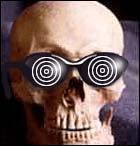
Dr Ray's face in this focal spot is a true representaion of yourself ! From your method of argument which does not really centre on objectivity but selfishness and greed,it really looks like you have got no grey mater in that empty skull.No wonder you had to hide your ugly eyes inside that dark spectacle !! Ha Ha Ha ! You know wat,I am a radiographer with mercuryhealth,I have worked in several places in the UK and I can authoritatively tell you that mercury is the place to be...Stop being jeaolous ray,with or without the DOH contract,we will still be out there saving patients from people of your ilk !
Am sure you must have included mercuryhealth in the body of ur x-ray reports lately,poor patients ha ha ha....


Does anyone else have trouble understanding this? It's no wonder they were told to stop posting later in the day when the quality of these front-line staff was becoming clear for all to see.

Wednesday, 21 November 2007

DoH pulls plug on MercuryHealth mobile scanners


Tuesday was a truly horrible day in the West Midlands.
I took a day out to attend a radiologists' meeting at Heartlands Hospital in Birmingham, only 70 odd miles away, and spent a total of 5 hours on the road driving (or sitting in stationary traffic) in heavy rain and half an hour queuing for lunch for the sake of around 4 hours of lectures.
I did, however, end the day a happy man. During the meeting, Tom Goodfellow, a radiologist in Coventry, announced that the Department of Health had terminated the contract with Mercury Health to provide "2nd wave diagnostics" scans in the West Midlands. Care UK, the company which bought Mercury Health earlier this year for £77million, makes a curt announcement on their website. The news was also briefly covered in the Guardian.
I have written about the Mercury Health contract before on this blog. The second wave diagnostics program was a central pillar in support of Nulabour's plans to close down District General Hospitals (DGHs). The plan was to divert the easier scans to the private sector leaving the complex, difficult and unprofitable scans to the DGH x-ray departments. These would not support continued investment in staff and equipment and within the five year period of the contract most DGH x-ray departments would have become obsolete. Modern medicine demands on-site access to MRI and CT for a DGH to be viable so this would result in a downgrading or closure of the DGH.
The news was greeted with clapping and cheering from the 150 odd consultants and trainees at the meeting. As it happens, the radiologists at Heartlands Hospital were involved in the Mercury contract and we heard from the horse's mouth that the failed endeavor will cost the taxpayer £84 million in compensation payments. From the figures given to us by Mercury last month (see earlier blog) I would guess they have done a total of around 840 scans, costing the taxpayer £100,000 per scan compared to £200 which we charge for a private scan at uk-radiology. The reason the contact was canceled was the lack of demand. It seems that Mercury was only working at 5% of anticipated capacity.
Dr Ray is not one to gloat over Nulabour's discomfort caused by this pigheaded pursuit of political dogma against the advice of almost every radiologist in the UK, the National Audit Office and a House of Commons Select Committee on Health but I will make an exception in this case.

Ya boo sucks-- We told you so!! Ha Ha Ha!!


Saturday, 17 November 2007

China gets recycling bug


Not posted for a while due to work but here is an interesting item I nicked off the doctors-only website, Univadis:

Used condoms are being recycled into hair bands in southern China, threatening to spread sexually-transmittable diseases they were originally meant to prevent, state media reported Tuesday.

In the latest example of potentially harmful Chinese-made products, rubber hair bands have been found in local markets and beauty salons in Dongguan and Guangzhou cities in southern Guangdong province, China Daily newspaper said.

"These cheap and colourful rubber bands and hair ties sell well ... threatening the health of local people," it said.

Despite being recycled, the hair bands could still contain bacteria and viruses, it said.

"People could be infected with AIDS, (genital) warts or other diseases if they hold the rubber bands or strings in their mouths while waving their hair into plaits or buns," the paper quoted a local dermatologist who gave only his surname, Dong, as saying.

A bag of ten of the recycled bands sells for just 25 fen (three cents), much cheaper than others on the market, accounting for their popularity, the paper said.

A government official was quoted as saying recycling condoms was illegal.

China's manufacturing industry has been repeatedly tarnished this year by a string of scandals involving shoddy or dangerous goods made for both domestic and foreign markets.

China's manufacturing industry has also been tarnished by accusations of non-sustainable development and environmental pollution so I suppose we should be pleased they are trying to do something to remedy this.

Wednesday, 31 October 2007

Darzi exposed

Resistance is futile

Most medical people recognise that Darzi was brought in to give a veneer of clinician support to the wholesale transfer of healthcare to the private sector. While we recognise it, we are individually powerless to resist this and our BMA representatives are, at best, supine to the extreme, and at worst, enabling the government in its plans by suggesting that, for example, doctors' work could be done by pharmacists, nurses, paramedics and other various jumped up quacks who did not possess the intelligence and work ethic to train as real doctors.

With her permission, I have reproduced a posting on DNUK (a doctors only site) by Miss Anna Athow, a Consultant Surgeon with 35 years experience as a doctor. Although it is perhaps overlong it does dissect the truth behind Darzi's reforms and needs a broader readership.


Darzi's 'Framework of Action'=NHS privatisation in England

The “Framework for Action” plan for Londons healthcare fronted By Professor Sir Ara Darzi, proposes the destruction of a publicly provided NHS in London. It is a blue print for privatising the NHS nationally.

Lord Darzi, the National Advisor on Surgery, has been working with the Labour government for 10 years on the NHS plan and promoted the separation of elective from emergency surgery into independent sector treatment centres( ISTCs). Under Gordon Brown he has been elevated to under secretary of state for health and he is being used to pretend that doctors are in favour of dismantling the NHS.

This lengthy document, is designed to deceive the unwary, laced as it is with fine phrases about improving healthcare and ending inequality. Nothing could be further from the truth.

It claims to be about services not institutions. In fact it proposes to smash the fundamental institutions of the NHS; NHS general practices and district general hospitals (DGHs), and replace them with brand new institutions; POLYCLINICS

Though the report does not say so, these would be owned and run by private healthcare corporations and would act like American health maintenance organisations.

The essence of the destruction plan is to be found in the Technical document. Accountant have analysed all the health care procedures performed in London in 2005/6 . Using the techniques developed for payments by results ( PBR) tariffs, every healthcare procedure perfomed in London in 2005/6 has been classified by HRG ( Health Resource Group ) and the volume of each of them recorded.

London’s entire healthcare is then viewed from a commercial perspective and is laid out as a prospectus to attract private healthcare investors. It is is the complete antithesis of a medical approach to healthcare, which begins from clinical needs.
This document starts out from the financial interests of the private healthcare providers and divides the whole of medicine into arbitrary “ Service Lines” based on estimated profitability.

Elective surgery for example is divided into – complex, "high throughput", minor procedures and under 17s. “ High throughput” surgery consists of procedures such as cataracts, arthroscopies and inguinal hernia repairs. These belong to the surgical specialties of ophthalmology, orthopaedics and general surgery, but are all lumped together because they are attractive to ISTCs as short episodes of surgical care.

We are told that the small group behind the technical paper worked to basic principles the first of which, was to allocate to Polyclinics every aspect of healthcare they could. This is what they have done. Essentially every walking patient having a daytime procedures has been allocated to polyclinic care.

60% of London's healthcare would end up in them.They would contain
*70% of all GPs WITH THE PLAN THAT OVER TIME ALL INDEPENDENT GPS WILL GO INTO THEM.
*50% of community care, (district nurses health visitors etc)
*50% of outpatients clinics, shifted out of hospitals
* 50% of A&E patients shifted from hospitals into walk in urgent care centres
*all ‘routine’ diagnostics such as xrays, CTscans, other tests.
Also, regular attenders, patients with Long term conditions, non emergency medical procedures such as endoscopies, patients having chemo therapy, minor operations etc.

Polyclinics would predominantly employ GPs and nurse practitioners or other practitioners. There would be few consultants and staff nurse support. There would be no junior doctors.
For 150 new polyclinics each with catchment areas of 50,000 population to be successfully launched, Londons district general hospital are to be largely destroyed.

OBLITERATION OF DGHS- THE DECIMATION OF ACUTE CARE.
Darzi says. “ The days of the DGH doing all services to high standard are over.”
The plan is that the 32 DGHs in London would be reduced to between 8 to 16 acute major hospitals.
The other 16 to 24 DGHs would be destroyed or turned into rumps called Local hospitals.
Local hospitals would have medical inpatients only. There would be no surgeons or anaesthetists on site. Intensive care units would be closed. The A&E department would remain open, but would be in the dangerous situation of not having surgery on site. So if a surgical emergency arrived or developed, they propose that either a surgeon would be called in from another hospital or if the patient were very ill, he would intubated and ventilated and shipped across London in an ambulance to one of the few acute major hospitals left.

Supposedly, ambulance men would be trained to decide which patient should go to the urgent care centre in the polyclinic, which to a Local Hospital and which to a major acute hospital. They would learn to “bypass” hospitals.
Those DGHs closed completely, as is planned at Chase Farm Hospital in Enfield, would become sites for polyclinics, walk in urgent care centres +/- elective surgical centres (ISTCs).

Darzi says that six clinical working groups were set up to advise him on the new models for healthcare ( mental health left to one side )
1. maternity and new born
2. staying healthy
3. acute care
4. planned care
5. longterm conditions
6. end of life care.
The division of healthcare into these apparently arbitrary divisions becomes clear on reading the recommendations. 1. 3 and 5. are to be cut to the bone. 2. 4. and 6. are to enjoy huge new investment for the private sector.
1.3.5. all comprise consultant intensive hospital specialties.
1. Consultant led obstetric units are to be reduced and replaced with midwife led birthing units and home births (to increase from 2% now to 10% target in the future.)
3. Paediatrics, emergency and elective surgery and intensive care units are to be stripped out of DGHs as described above.
5. Patients with long term conditions such as diabetes, who in their old age make up the majority of acute hospital admissions are to have their acute care massively cut. Every effort is to be made to keep them out of hospital. They are to look after themselves, and go to polyclinics.

2.4. and 6 are to be expanded. Private enterprises are to be employed keeping people healthy. Planned care like outpatients, diagnostics and elective surgery are to shifted into polyclinics and ISTCs. As for the dying, the DoH has suddenly developed great enthusiasm for helping patients to die out of hospital and in their own home. Private companies called “ End of Life service providers”are to get the lucrative contracts.

DISINTEGRATION OF CARE
What we had in the NHS was primary care (GPs and community care ), which was local and personal, secondary care ( DGHs and teaching hospitals) embracing all aspects of care on one site and providing training for the next generation of doctors and other staff, and tertiary care ( more specialised hospitals for less prevalent conditions such as neurosurgery, burns, etc )
The Darzis plan proposed to disentegrate care into seven models;-
Home,
Polyclinics,
Local hospitals
Elective surgery centres
Major acute hospital, specialist hospitals. Academic Health Science Centres.
Polyclinics, and elective surgery centres would be owned and run by private corporations. The latter hospitals have to become foundation trusts by 2008 so these would be run as businesses. The plan for local hospitals is probably to starve them of funds and gradually run them down. There would be no NHS left.

THE POWER OF COMMISSIONING.
“ Commissioning can only drive change if it has a direct impact on the income of healthcare providers. Funding flows need to be used to incentivise the best practice contained in this report. At its simplest, this means commissioners defining the best practice for a patient pathway and then ensuring that this best and only this is the best practice they pay for.”
These stark words say it all. The commissioners will dictate so called “ best practice”. If that means that a patient can only be seen by a nurse practitioner in a polyclinic and not by a consultant at a hospital, so it will be.
The commissioning role of PCTs is now being outsourced so that the private corporations will be laying down the rules of so called “ best practice ” pathways.

THE DARZI PLAN MUST BE TOTALLY REJECTED. It represents a fatal reduction in the volume and quality of healthcare for Londoners in the interests of big business. The BMA should unite with other unions in fighting to defend the NHS. The government has no mandate for privatising the NHS and must go. It must be replaced with a government which will fully fund a publicly provided NHS.